Species, watching spots, snorkelling, nesting and protection: everything you need to know to swim with sea turtles in Martinique, with full respect for the animal.
Sea turtles · Martinique
Swimming with sea turtles in Martinique
Martinique offers ideal conditions for watching sea turtles: warm, clear waters, rich seagrass beds and sheltered bays along the Caribbean coast. This complete guide tells you everything — the species present, where and when to see them, how to swim with them respectfully, and why they are so precious.
Martinique is one of the finest places in the Caribbean to watch sea turtles in their natural habitat. These marine reptiles, present on Earth for more than a hundred million years — long before the dinosaurs — have survived the great extinctions and today frequent the island's warm, crystal-clear waters to feed and rest. Some species also come to nest on its beaches, perpetuating a cycle millions of years old.
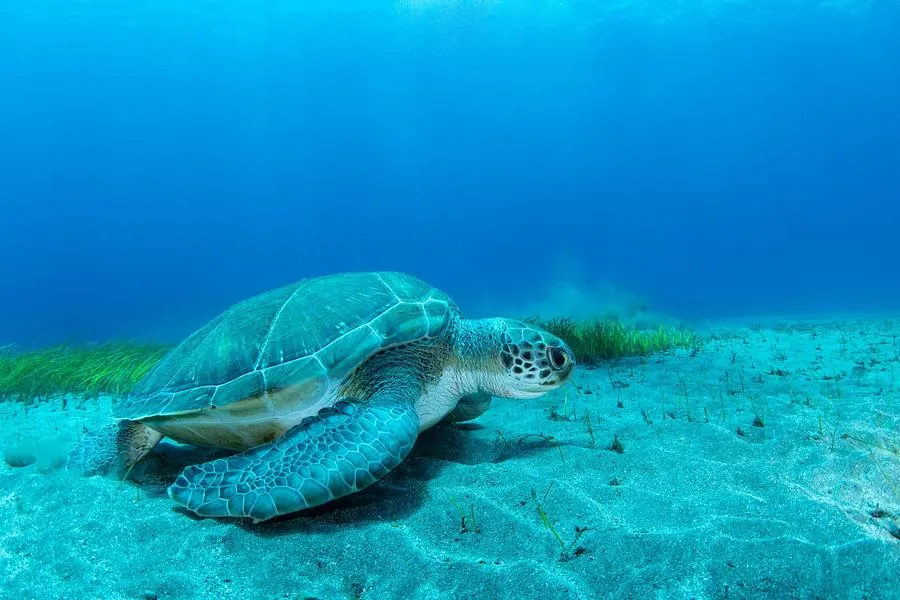
Swimming alongside a green turtle grazing peacefully in a turquoise cove is an unforgettable experience, open to everyone, young and old alike. They are found above all on the Caribbean coast, in the sheltered, shallow bays where beds of marine seagrass grow — their pantry. The clarity of the water, the gentleness of the lagoon and the regular presence of turtles make Martinique a prime destination for this kind of encounter.
On our half-day excursions departing from Anse à l'Âne, a snorkelling stop very often lets you approach them, always with the greatest respect for the animal. This complete guide brings together everything you need to know before setting off to meet them: the species present in Martinique, their biology, the best spots, the right season, the watching rules and the challenges of their protection.
The species
Three main species regularly frequent the waters of Martinique, and two others are rarer here. All are fully protected.
Green turtle
Chelonia mydas
The most commonly seen while snorkelling. Herbivorous as an adult, it grazes on seagrass beds and algae in shallow bays. It can reach 1.2 m and exceed 150 kg. Its name comes from the greenish colour of its fat.
Hawksbill turtle
Eretmochelys imbricata
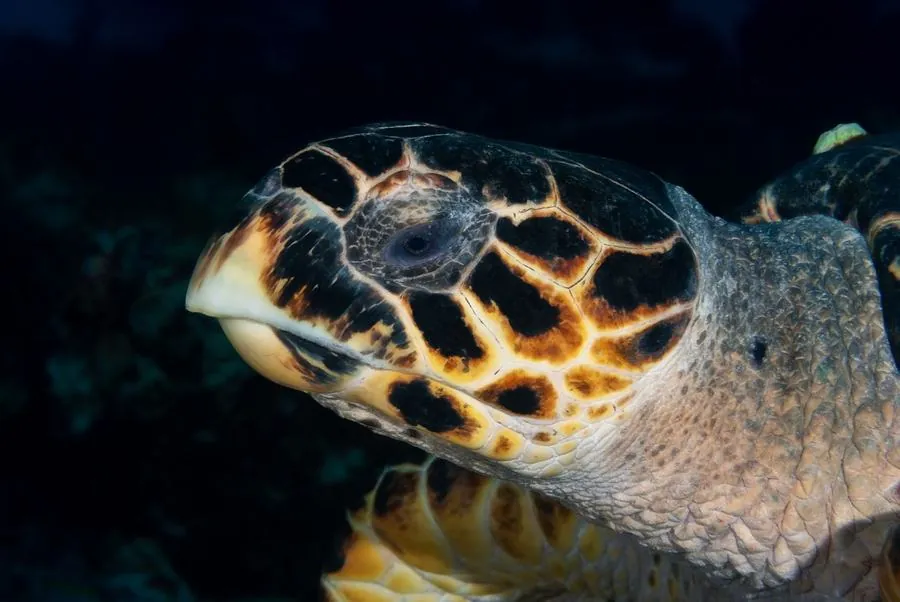
Recognisable by its pointed, raptor-like beak and its magnificent shell with overlapping scales. It lives near coral reefs, where it feeds on sponges. Long hunted for its shell, it is now strictly protected.
Leatherback turtle
Dermochelys coriacea
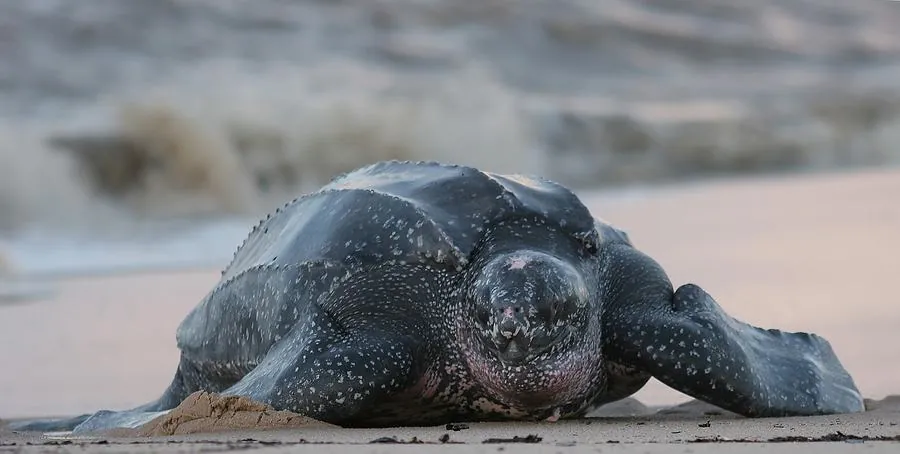
The largest sea turtle in the world (up to 2 m and 700 kg), with no bony shell: its back is covered in thick, rubbery skin. A great ocean traveller, it feeds on jellyfish and comes to nest on Martinique's beaches.
Loggerhead turtle (rare)
Caretta caretta
With its large head and powerful jaws, it is more occasional in the island's waters. The olive ridley turtle (Lepidochelys olivacea) is also rare here.
Biology & way of life
Contrary to popular belief, the sea turtle cannot pull its head or flippers into its shell: its body is entirely adapted to aquatic life. Its limbs have evolved into flippers — long paddles at the front for propulsion, shorter ones at the rear for steering — that make it a graceful and tireless swimmer, capable of travelling thousands of kilometres across the oceans.
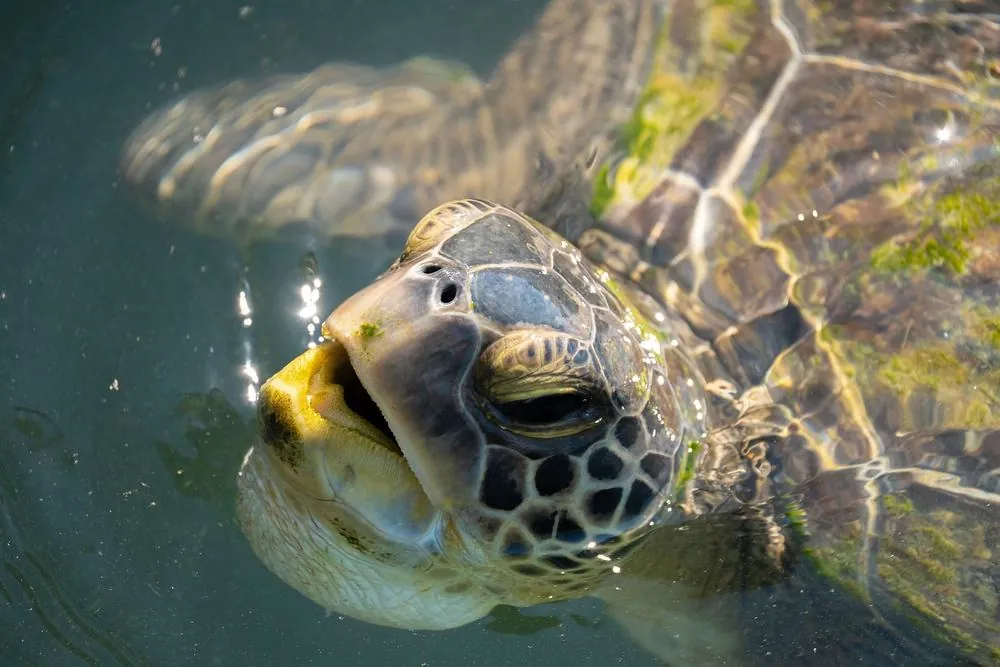
It is a reptile, not a fish: it breathes air and must return to the surface regularly. A resting turtle can nonetheless hold its breath for several hours, its heart rate slowing considerably. Sea turtles live very long lives — often more than fifty years, sometimes far longer — and reach sexual maturity late, at around twenty to thirty years, which makes every individual precious to the survival of the species.
Their diet varies by species and shapes the ecosystem: the green turtle, a herbivore, tends the seagrass beds by grazing them like a natural lawnmower; the hawksbill turtle regulates sponge populations on the reefs; while the leatherback turtle feeds almost exclusively on jellyfish. Turtles are gifted with a remarkable sense of direction, able to detect the Earth's magnetic field, which guides females to the exact beach of their birth decades later.
Where to see them
Green and hawksbill turtles are found above all on the Caribbean coast, in sheltered bays with calm, clear waters. A few sites are particularly renowned:
Anse Dufour and Anse Noire (Les Anses-d'Arlet) — the island's best-known spots for swimming with green turtles, which graze the seagrass beds just a few metres from the shore.
Grande Anse d'Arlet — seagrass beds and reefs regularly frequented by turtles.
The many coves of the leeward coast, between Les Trois-Îlets and the south, offer seagrass beds well suited to their feeding.
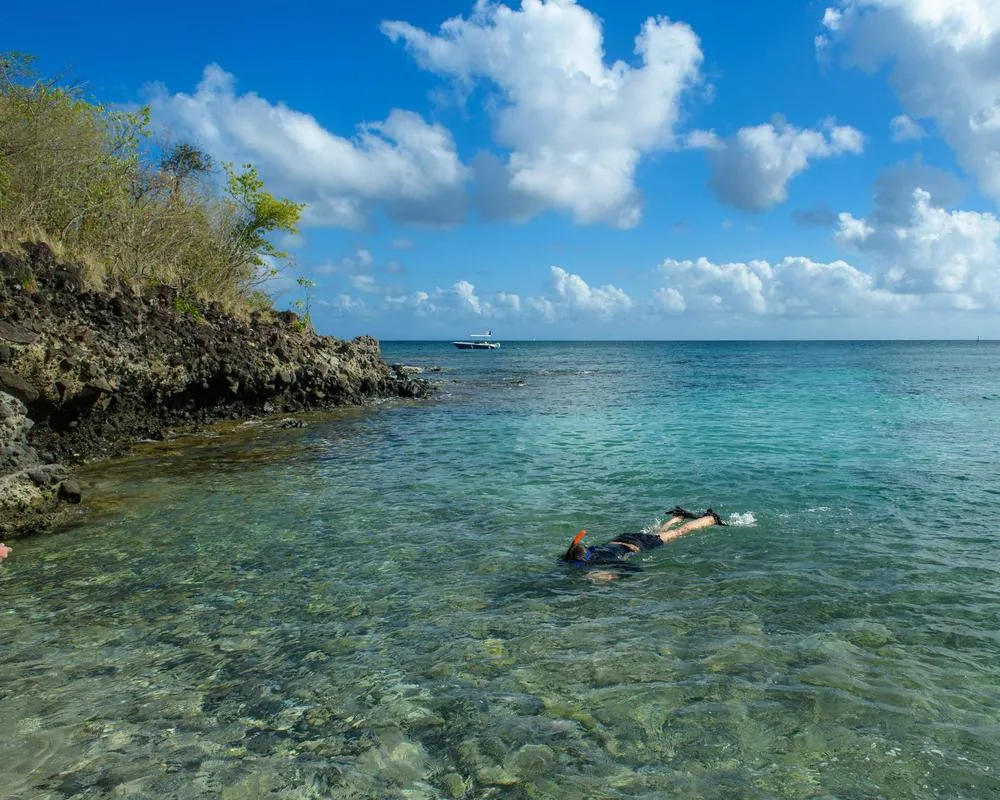
On our excursions, we make a snorkelling stop above the seagrass beds, where the turtles come to feed — masks and snorkels are provided on board. It is often the highlight of the outing, alongside dolphin watching.
When to see them
Good news: sea turtles are present all year round in Martinique to feed on the seagrass beds. So there is no best season to watch them while snorkelling — every outing is a chance to meet them.
The nesting season is different: the females come to lay their eggs on the beaches, mainly from March to October depending on the species (the leatherback turtle rather early in the period, the green and hawksbill turtles later in the season). It is a sensitive time when the quiet and darkness of the beaches are essential to the success of the nesting.
Swim with the turtles
Swimming with sea turtles is an activity open to everyone, even beginners and children (life jackets and equipment provided). For the encounter to remain respectful of the animal, a few simple rules apply:
Keep your distance — at least 3 metres — and never touch or chase the turtle.
Do not block its path to the surface : the turtle is a reptile that must come up to breathe regularly.
Stay calm, avoid abrupt movements and splashing, which frighten it.
Do not give it anything to eat and do not use a flash.
Watched respectfully, a turtle that shows little wariness keeps grazing peacefully, offering a magical sight. Our crews make sure the watching is done without ever disturbing the animal.
Nesting & hatching
Sea turtles have a fascinating life cycle. Once mature, the females return to nest on the beach where they were born, sometimes after thousands of kilometres of migration across the Atlantic. At night, under cover of darkness and high tide, they slowly emerge from the water, climb up the upper beach, dig a deep nest in the sand with their hind flippers and lay around a hundred eggs the size of a ping-pong ball, before turning back and quietly returning to the sea. A single female may nest several times over a season, a few weeks apart.
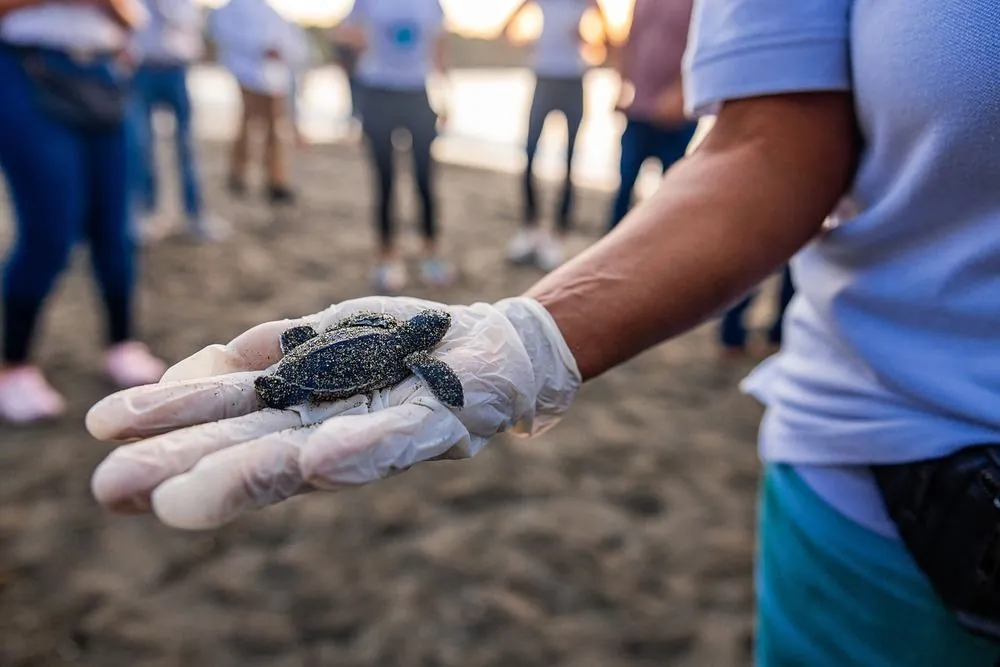
After about two months of incubation, the hatchlings emerge all together and rush towards the ocean — a perilous race that few will survive. A surprising fact: the sex of the young depends on the temperature of the sand during incubation, which makes turtles particularly vulnerable to global warming. In Martinique, several beaches host nesting sites, monitored each year by the protection networks.
A protected species
All sea turtles are fully protected in Martinique and in French waters. It is forbidden to capture, touch or disturb them, to collect their eggs or to interfere with nesting sites. Failure to respect these rules is punishable by law.
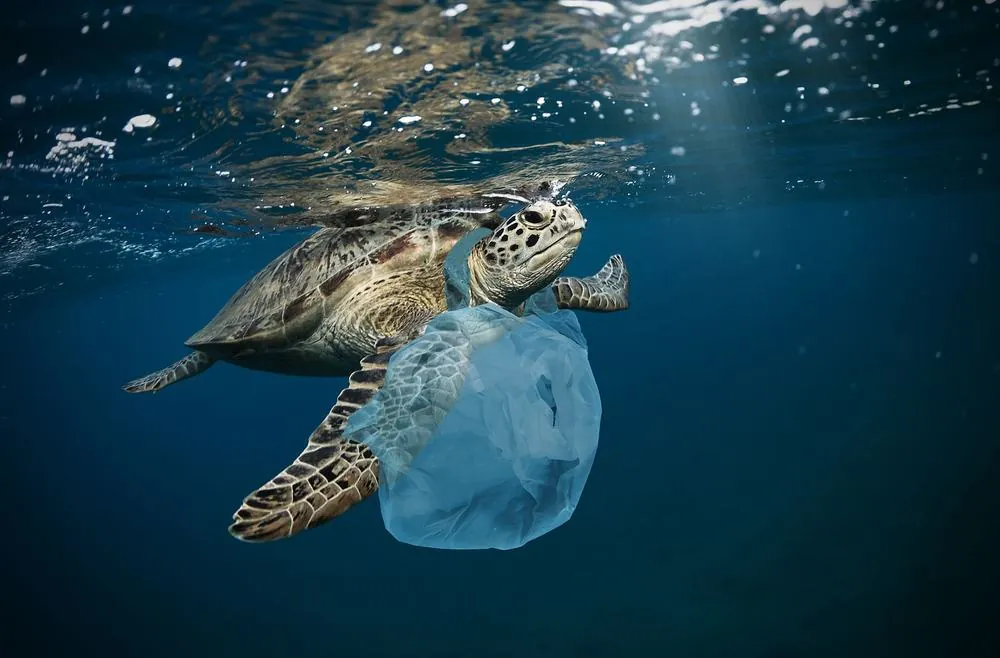
Long hunted for their meat, their eggs and their shell, turtles remain threatened today by plastic pollution (which they mistake for jellyfish), accidental catches, the degradation of beaches and collisions with boats.
In Martinique, the Réseau Tortues Marines and the ONF monitor the populations and the nesting sites. Everyone can help: cut down on plastic waste, respect watching distances and report any turtle in difficulty. Watching turtles responsibly is already taking part in their preservation.
Threats & conservation
Despite their longevity, sea turtles are among the most threatened animals on the planet. The leading cause of death today is plastic pollution : a floating bag looks deceptively like a jellyfish, and swallowing it can be fatal. Microplastics and abandoned nets — the "ghost nets" — also trap and injure many individuals every year.
The accidental catches in fishing gear, the collisions with motorboats, the light pollution that disorients the hatchlings, the erosion and development of nesting beaches, as well as global warming — which unbalances the sex ratio of the young — weigh heavily on populations already made fragile by centuries of hunting for meat, eggs and shell.
The good news is that this mobilisation is bearing fruit. In Martinique, the Réseau Tortues Marines, the Office national des forêts and many volunteers monitor the nesting sites, raise public awareness and care for individuals in distress. Everyone can do their bit: cut down on plastic waste, avoid lighting the beaches at night during nesting season, scrupulously respect watching distances and report any injured or stranded turtle to the relevant authorities.
Watch with us
Our half-day excursions, departing from Anse à l'Âne in Les Trois-Îlets, combine watching wild dolphins with a snorkelling stop with the turtles, with the greatest respect for wildlife. Masks and snorkels are provided on board, life jackets are available for everyone, and the crew guides you for a safe encounter, even if you are a beginner or travelling with children.
Your half-day includes: the search for dolphins offshore, a swim over the seagrass beds with the turtles, the discovery of the sea cave and its bats, and friendly onboard drinks. Two departures are offered each day, morning and afternoon, to suit your pace and the sea conditions.
By choosing an operator that respects the approach charter, you make sure you experience these encounters without ever disturbing the animals — because watching wildlife responsibly is already helping to preserve it for future generations.
Frequently asked questions
No. Life jackets are provided and snorkelling is done at your own pace, always supervised by the crew.
No, it is forbidden and it stresses the animal. You keep your distance (at least 3 metres) and let it breathe and feed in peace.
All year round for snorkelling: turtles feed continuously on the seagrass beds. Nesting, however, takes place mainly from March to October.
The green turtle, which grazes the seagrass beds in the shallow bays of the Caribbean coast.
Yes, masks and snorkels are provided on board for all participants.
From Anse à l'Âne or Anse Mitan, in Les Trois-Îlets, on the Caribbean coast.
Snorkelling stop
An unforgettable encounter
On every excursion, we make a stop above the seagrass beds to swim with the turtles — masks and snorkels provided on board, supervised by the crew.