Dolphins, pilot whales, sperm whales and whales: more than twenty species of cetaceans frequent the waters of Martinique. Here is the complete guide, species by species.
Cetaceans of Martinique
An exceptional diversity
Martinique, at the heart of the AGOA sanctuary, is home to a remarkable diversity of marine mammals. More than twenty species of cetaceans — dolphins, pilot whales, sperm whales and whales — frequent its waters, some year-round, others passing through with the migrations.
Here is the detailed guide to the main species you can observe off Martinique. During our excursions departing from Anse à l'Âne, it is above all the coastal dolphins — bottlenose dolphin, Atlantic spotted dolphin, spinner dolphin — that you will have the chance to encounter, in keeping with the marine mammal approach charter.
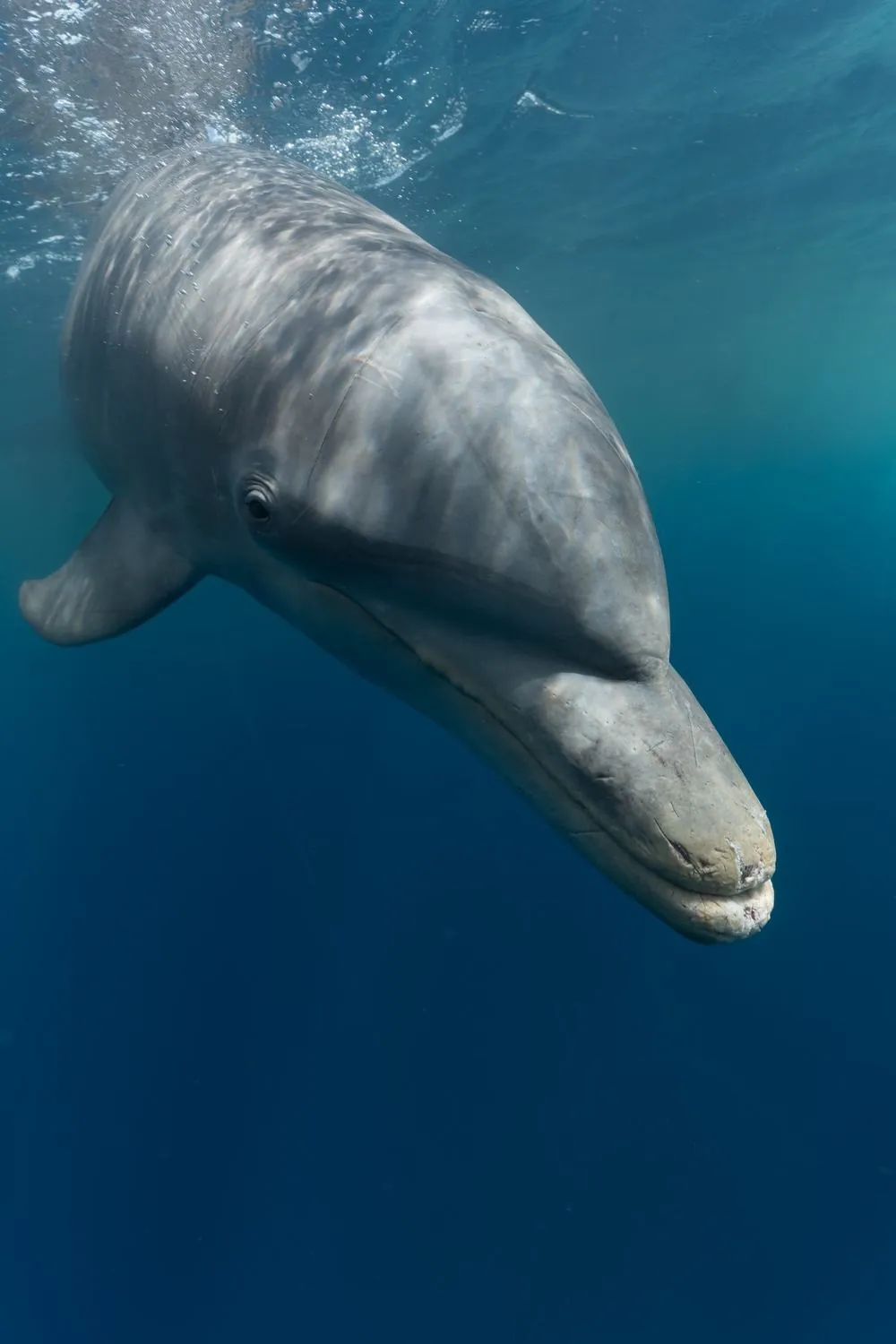
Sturdy and stocky, the bottlenose dolphin measures 2.5 to 4 metres and weighs 200 to 400 kg. Its skin is slate grey on the back and lighter on the belly, and its short, thick beak gives it that so-characteristic "smile". It is the best-known dolphin species in the world.
Highly sociable and intelligent, it lives in tight-knit groups of a few individuals to several dozen. Playful, it happily surfs the bow wave of boats and hunts cooperatively of fish and cephalopods. Its curiosity makes it an exceptional travelling companion at sea.
In Martinique, it is the resident species most often observed, all year round, along the Caribbean coast. It readily approaches boats: it is the star of our excursions departing from Anse à l'Âne.
Delphinid
Atlantic spotted dolphinStenella frontalis
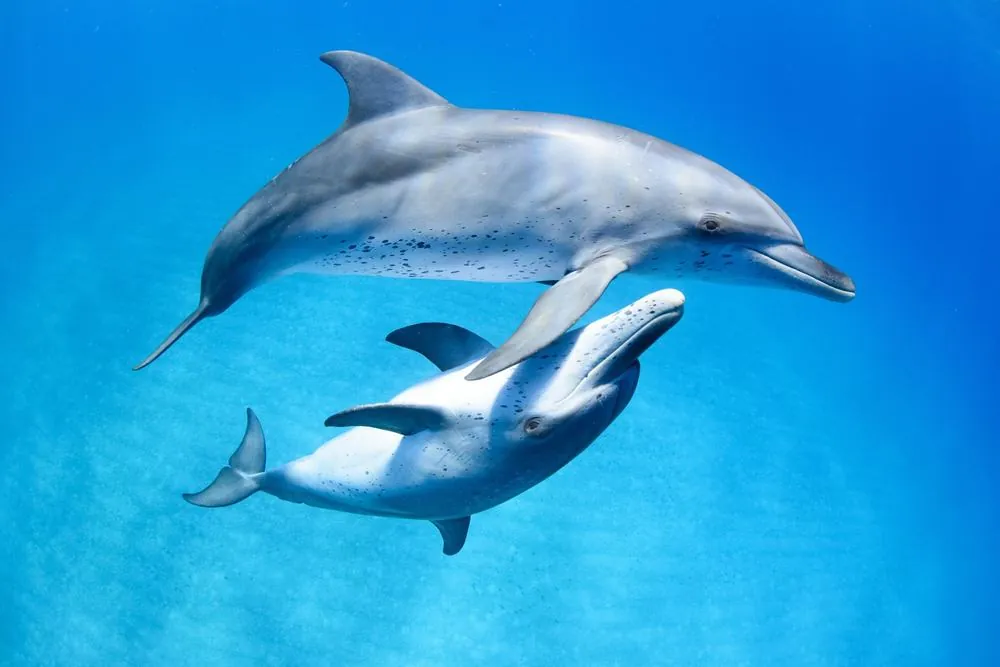
More slender than the bottlenose dolphin, it measures 1.7 to 2.3 metres. Its grey body becomes covered with light and dark spots that appear and then intensify with age: the young are born spotless and gradually become "speckled".
Gregarious and acrobatic, it moves in groups of five to several dozen individuals, performing many leaps and figures. It feeds on small fish and squid, often in open water.
Common off Martinique, it is regularly encountered in playful, demonstrative groups — a sight much appreciated during trips.
Delphinid
Spinner dolphinStenella longirostris
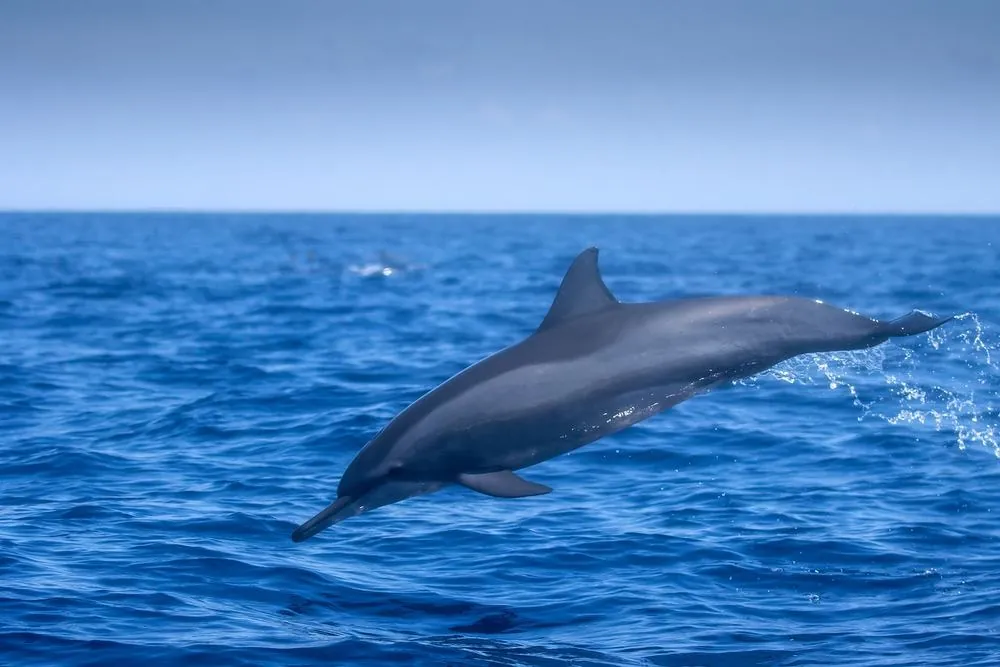
Slim and streamlined, with a long, very fine beak, it sports a three-tone markings (dark back, grey flanks, light belly). It measures 1.3 to 2 metres.
It is the most acrobatic of dolphins: it is famous for its spinning leaps ("spins") during which it whirls around on itself out of the water. It lives in very large groups, hunts in the depths at night and rests by day in coastal areas.
Present in the deep waters around Martinique, it offers an unforgettable spectacle when you are lucky enough to cross its path.
Delphinid
Fraser's dolphinLagenodelphis hosei
Stocky, with a short beak, a small dorsal fin and small flippers, it often shows a marked dark band along the flanks. It measures 2 to 2.7 metres.
Extremely gregarious, it forms tight, compact groups that can number several hundred individuals. Its swimming is fast and energetic, throwing up a great deal of water. It is a species of deep tropical waters.
More elusive in the Caribbean, it is observed offshore, generally in large gatherings.
Delphinid
Risso's dolphinGrampus griseus
From 2.6 to 3.8 metres, robust, it has a round head with no marked beak (prominent melon). Its grey body lightens with age and becomes covered with numerous white scars, left by other members of its species and by the squid it feeds on.
It lives in small groups of a few individuals to a few dozen and dives deep to hunt cephalopods. Its behaviour is generally calm.
It is observed off Martinique, in small groups, often recognisable by its heavily scarred skin.
Delphinid
Rough-toothed dolphin (Steno)Steno bredanensis
From 2 to 2.8 metres, it stands out for its "conical" head: the forehead extends into the beak with no clear demarcation, an almost reptilian silhouette. Its skin often bears light spots.
It moves in small groups in warm, deep waters, where it hunts fish and cephalopods.
A species present but less common around Martinique, to look for offshore.
Delphinid
Melon-headed whalePeponocephala electra
Slender and dark in colour, it is recognised by its pointed head, triangular seen from above, and by a slight lighter facial "mask". It measures 2 to 2.7 metres.
It is an oceanic species that forms very large groups, sometimes of several hundred individuals, fast and sometimes associated with other dolphins.
It is encountered in the deep waters off Martinique.
Large delphinid
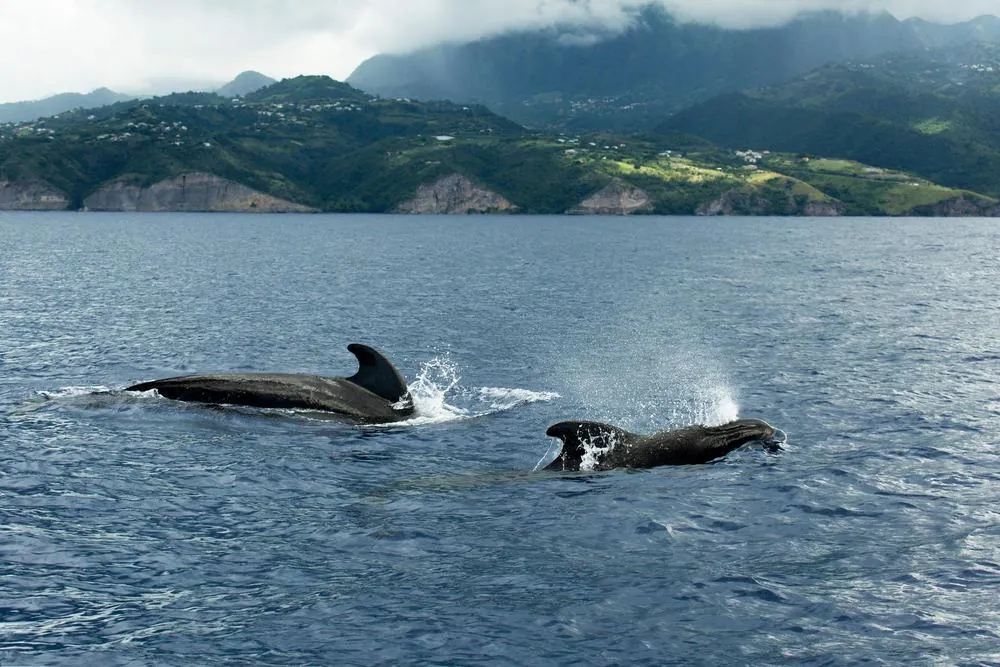
Short-finned pilot whaleGlobicephala macrorhynchus
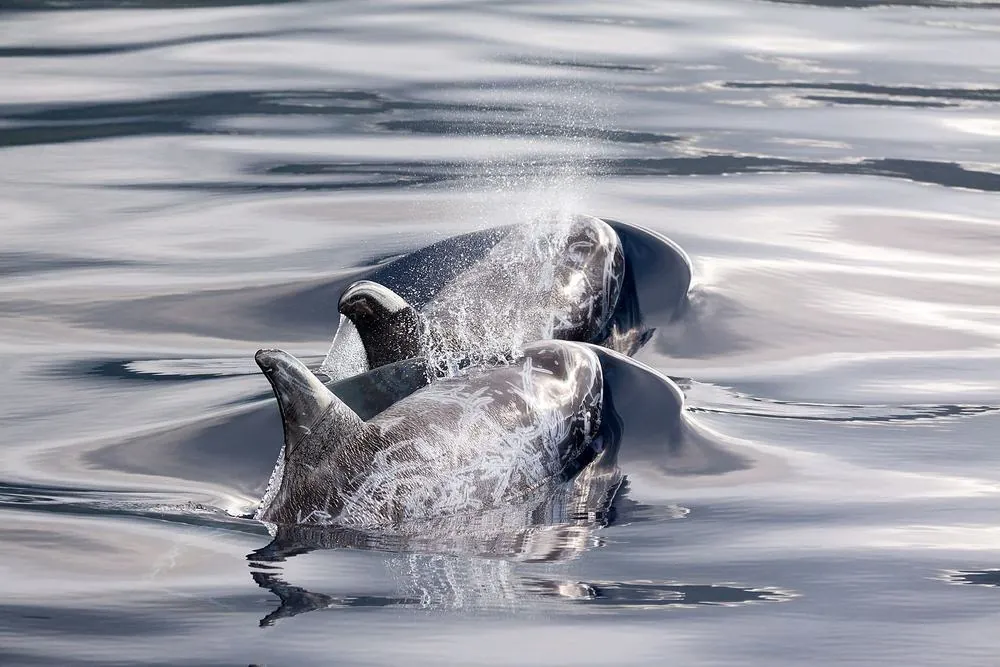
A large delphinid of 4 to 6 metres, black to dark grey, it is recognised by its big bulging melon, its stocky body and its broad, low dorsal fin. Males are markedly larger than females.
Nicknamed the "pilot whale", it lives in very tight-knit matrilineal family groups (10 to 50 individuals) with strong social bonds. It makes deep dives to catch squid.
It is one of the large cetaceans most regularly observed off Martinique.
Large delphinid
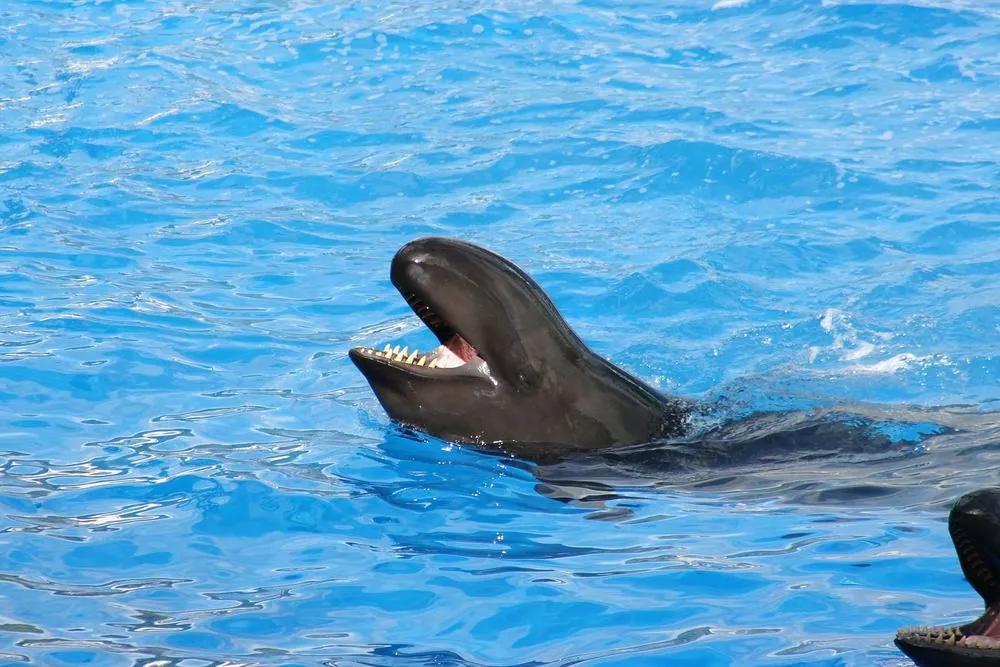
False killer whalePseudorca crassidens
From 4 to 6 metres, entirely black, it has a slender body, a narrow head with no beak and "S"-shaped pectoral fins. Despite its name, it is not an orca.
Very sociable and fast, it lives in tight-knit groups and hunts large fish. It is known for sharing its prey and for interacting with other dolphin species.
Present off the Caribbean islands, encountering it is always a powerful moment.
Large delphinid
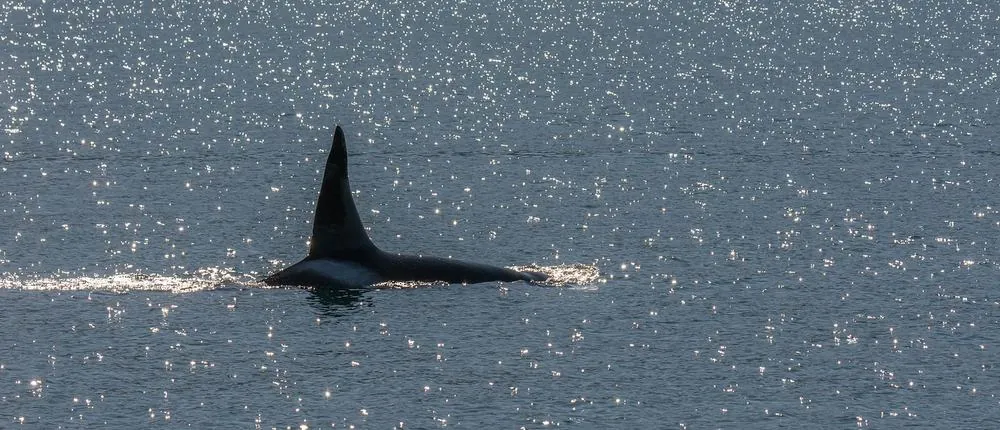
Orca (killer whale)Orcinus orca
From 5 to 9 metres, it is the largest of the delphinids. Its iconic black-and-white markings, its white eye patch and its tall dorsal fin (up to 1.80 m in males) make it unmistakable.
An apex predator at the top of the food chain, it lives in family groups and develops elaborate hunting techniques, passed down from generation to generation.
Sightings remain rare in the Caribbean, but they are documented: an exceptional event.
Sperm whale
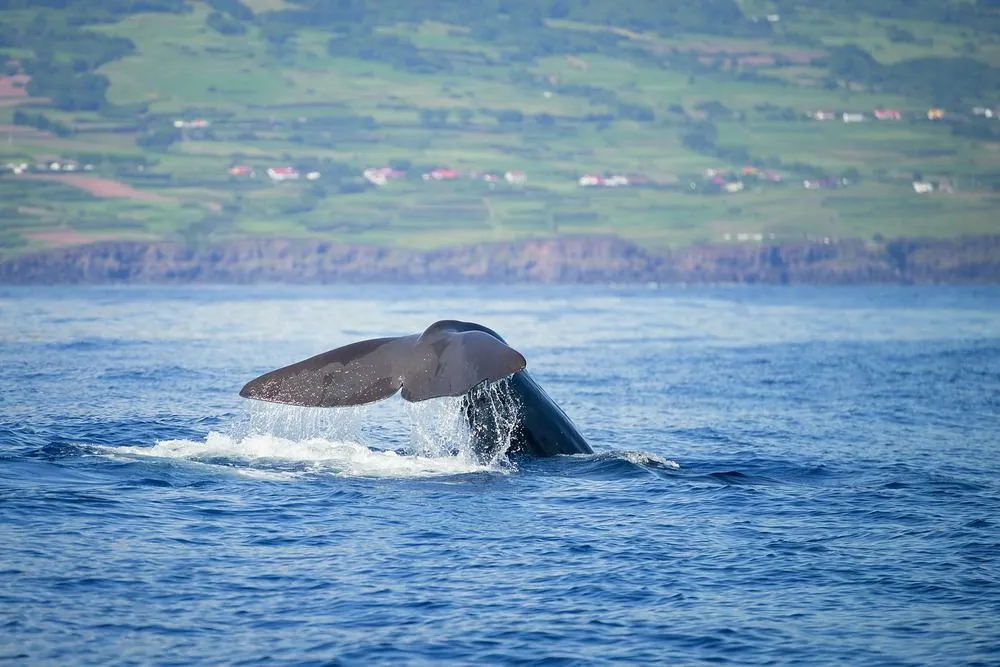
Sperm whalePhyseter macrocephalus
It is the largest toothed predator on the planet: males can reach 18 metres and 50 tonnes. Its enormous square head makes up nearly a third of the body, and its blow, angled forward and to the left, is characteristic.
An extreme diver, it descends to more than 1,000 metres for nearly an hour to hunt deep-sea squid. Females and young live in groups; the large males are more solitary.
The sperm whale frequents the deep waters of Martinique's Caribbean coast all year round, generally offshore.
Sperm whale
Pygmy sperm whaleKogia breviceps
A small sperm whale of 2.7 to 3.4 metres, with a conical head reminiscent of a shark, with a false "gill slit" on the side. Very elusive, it easily goes unnoticed.
Solitary or in small groups, it dives deep and surfaces only briefly. To escape predators, it releases a reddish cloud before fleeing.
A species rarely observed, tied to the deep waters of the sanctuary.
Sperm whale
Dwarf sperm whaleKogia sima
A close cousin of the pygmy sperm whale, it is even smaller (2.1 to 2.7 metres) and looks very much like it, which makes the two species hard to tell apart at sea.
Elusive and little known, it lives in the deep waters and very rarely shows itself at the surface.
Its presence around Martinique is confirmed, but sightings remain exceptional.
Whale
Humpback whaleMegaptera novaeangliae
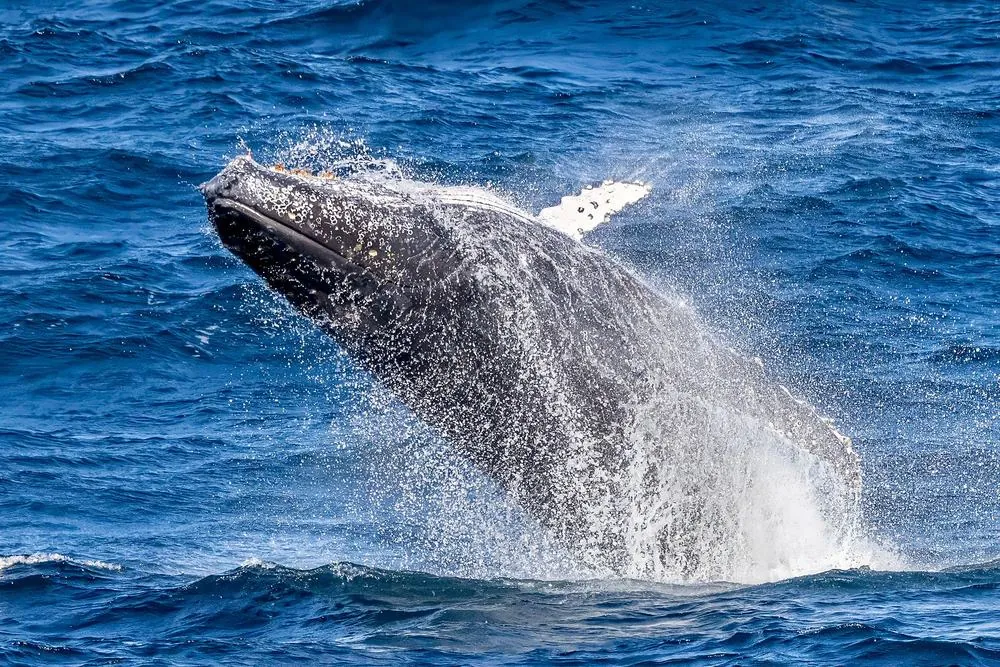
A giant of 12 to 16 metres, it is recognised by its very long pectoral fins (up to 5 metres), the tubercles on its head and the unique pattern of its tail fluke, which allows each individual to be identified. Its breaches are spectacular.
It is a baleen whale (mysticete) and a great migrator: it feeds in cold waters then heads to the tropics to breed and give birth. Males produce long, complex songs.
In Martinique, it is present in season, generally from January to March-April: it is the "whale season", the chance to observe blows, breaches and fin slaps.
Whale
Cuvier's beaked whaleZiphius cavirostris
From 5 to 7 metres, with a streamlined body and a small "goose-beak", it often bears numerous scars. Its colour varies from grey-brown to beige depending on the individual.
It is the champion of deep dives: it can descend to nearly 3,000 metres and stay submerged for more than two hours, a record in the animal kingdom. Very elusive, it lives in small groups.
It frequents the deep waters of the AGOA sanctuary around Martinique, but rarely lets itself be seen at the surface.
Responsible watching
Watching cetaceans with respect
All these species are protected. Our trips respect Martinique's marine mammal approach charter and the rules of the AGOA sanctuary.